BlinkAd delivers AI search and brand strategy training for Gangnam-gu hospitals at the Medical Tourism Association
BlinkAd Team
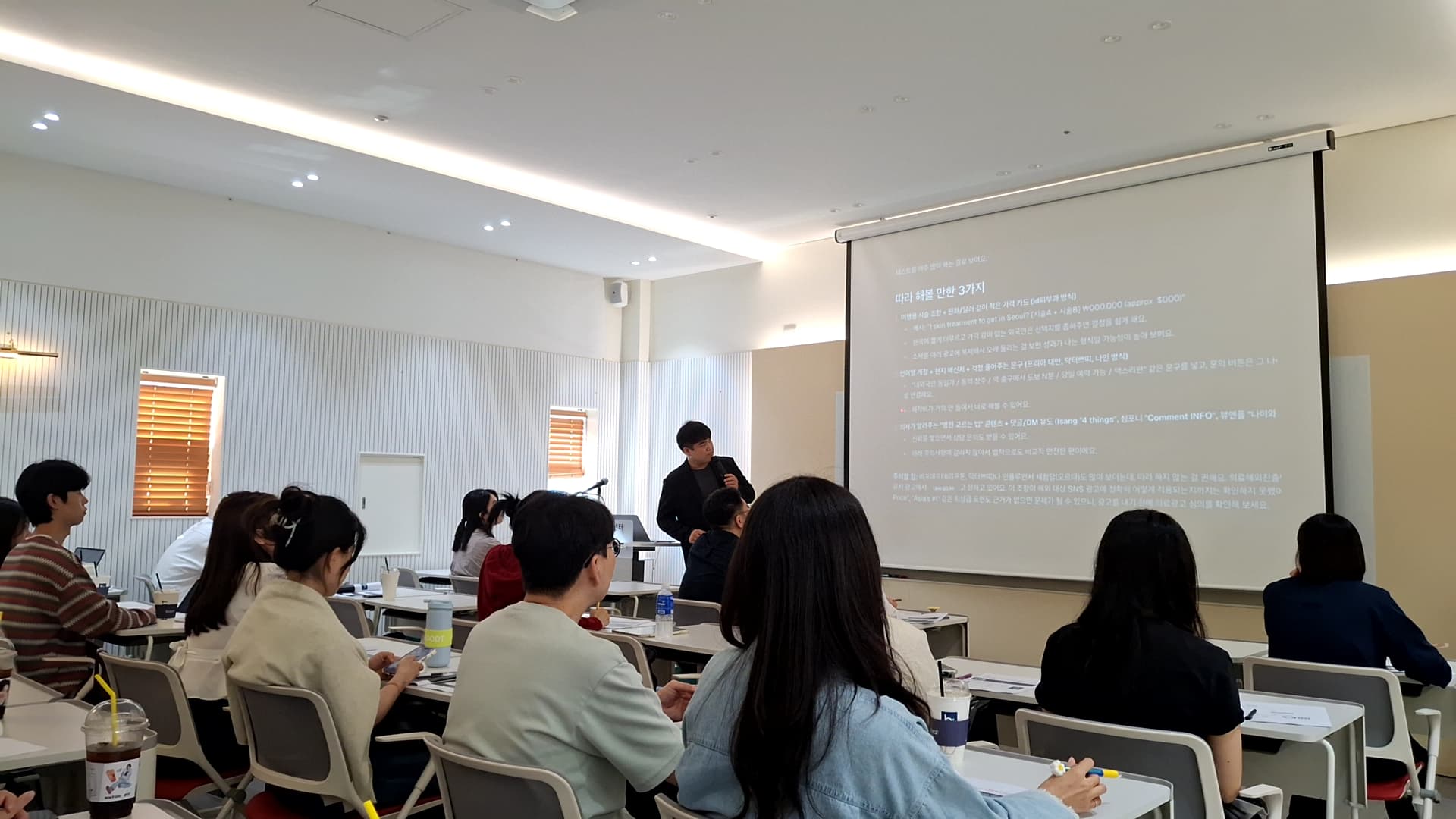
BlinkAd held training at the Medical Tourism Association for representatives of ophthalmology, plastic surgery and dermatology clinics, as well as general hospitals, in Gangnam-gu. The session covered preparing for AI search and building hospital brands, and was led by BlinkAd CEO Soonhyun Kwon.
The training examined how new patients first discover a hospital and decide to visit, and how returning patients come back and recommend it to others. It also explained how to manage Google Maps and the official website at each stage.
How patients discover a hospital and remember its brand
For new patients, a hospital's location, specialties, medical team and guidance before a visit help them compare and choose hospitals. For returning patients, it is important to be able to find information they need after treatment, along with guidance on requesting another consultation or arranging a visit.
Soonhyun Kwon explained hospital marketing from the patient's perspective. He examined how patients' perceptions of a hospital and their trust in it develop as they check information found through search and explanations read on its website against their actual consultation and treatment experiences.
Hospitals need to check whether the strengths they want to communicate are also reflected in their websites and Maps information. They should also review whether first-time and returning patients can find enough guidance to meet their respective needs.
Preparing for AI search starts with Google Maps and websites
Patients use Google Maps to check a hospital's location, business information, photos and reviews. On the official website, they learn more about the medical team and treatments and prepare for a consultation or visit.
The Google Maps marketing session explained the basics of keeping a hospital's name, specialties, address, contact details and opening hours accurate, and aligning them with information on the website. Accurate and complete core information also helps Google connect a hospital with relevant searches. Google Business Profile guidance
The AI search session examined website information and its accessibility to search engines. We discussed presenting the medical team, explaining treatments and answering patients' frequently asked questions in clear writing, and checking whether search engines can crawl and index those pages. These basic principles of search optimization also apply to Google's AI search features. Google Search Central guidance
Gaps in basic setup observed during hospital meetings
During meetings with hospital representatives, BlinkAd found a number of hospitals whose Google Maps listings and websites had been left unattended, with even basic setup still inadequate.
In many cases, the first steps were to check whether hospital information was up to date, key treatments were explained sufficiently, and the website appeared properly in search.
The training also emphasized first reviewing the current state of each hospital's online information. We outlined a sequence of updating core information on Google Maps and the website, then consistently maintaining treatment guidance and content addressing specific patient questions.
BlinkAd provides Google Maps management, website improvements, and content planning and management services that take AI search into account. We will run marketing tailored to each hospital's specialties and patient characteristics, helping patients find the hospital, compare information and proceed to a consultation or visit.